In this post
Get the latest insights delivered to your inbox
.png?width=771&height=322&name=umbrella-chair-around-beautiful-luxury-swimming-pool%20(1).png)
Pool service has quietly entered a new era. What used to be a clipboards-and-phone-calls business is transforming into a data‑driven, software‑powered operation where routes, billing, customer communication, and even chemical decisions run through digital systems. In 2026, the gap between pool companies that embrace this shift and those that do not will be obvious in their reviews, profitability, and ability to grow.
Pool Office Manager sits at the center of this digital transformation for pool‑only businesses, turning scattered processes into a connected platform that supports automation, smarter decisions, and a more professional customer experience. The companies that thrive over the next few years will be those that pair their field expertise with tools like POM that make that expertise scalable.
Trend 1: From paper and spreadsheets to connected, cloud-based operations
The first and most fundamental shift is simply moving away from paper and ad‑hoc spreadsheets to integrated, cloud‑based systems.
What’s changing
- Schedules and routes: No more whiteboards and printed route sheets that go out‑of‑date by noon.
- Customer records: No more searching through text threads and sticky notes for gate codes or special instructions.
- Billing: No more re‑typing handwritten notes into accounting software days or weeks later.
Instead, leading pool companies are building their operations around a single, always‑current system that everyone can access from the office or the field.
How Pool Office Manager fits this trend
Pool Office Manager gives pool businesses:
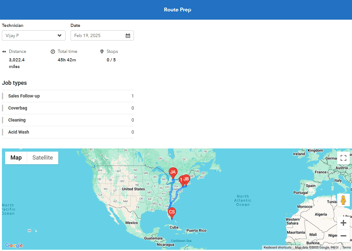
- A centralized calendar and route map that updates in real time.
- A shared customer database with addresses, notes, photos, and service history.
- Direct linkage between jobs completed in the field and invoices generated for customers.
This shift is not just “going paperless.” It is about creating one source of truth that keeps owners, office staff, and technicians aligned—something that becomes non‑negotiable as the industry grows more competitive and service expectations rise.
Trend 2: Smarter routing and resource optimization
In 2026, profitability will depend more than ever on how efficiently a company uses time, vehicles, and people. Fuel costs, wages, and traffic congestion all push pool companies to squeeze more value out of every route.
What’s changing
- Route planning: Instead of rough grouping by neighborhood, companies are optimizing routes with maps and real travel times.
- Real-time adjustments: Weather, cancellations, and sick calls are handled dynamically instead of blowing up the entire day.
- Capacity planning: Owners are using past data to decide when to add techs, trucks, or shift service areas.
How Pool Office Manager supports this
Pool Office Manager provides:
- Map‑based views of all accounts so routes can be built by geography, not just habit.
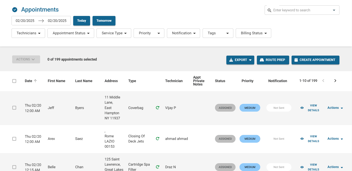
- Drag‑and‑drop reassignment of jobs, with instant updates to technicians’ mobile apps.
- Historical route and workload data that shows which days or areas are consistently overloaded.
The result is fewer miles driven, more stops completed per day, and a less stressful experience for both techs and customers. In a future where margins are constantly under pressure, companies that ignore route efficiency will struggle to keep up with those that use POM‑style tools to optimize it.
Trend 3: Automation of repetitive admin—especially invoicing and communication
The next wave of digital transformation is about automation—not robots cleaning pools, but software handling repetitive admin work so humans can focus on higher‑value tasks.
What’s changing
- Invoicing: Forward‑thinking companies are moving away from manual, batch invoicing toward automated processes tied directly to job completion.
- Reminders and notifications: Routine messages (service reminders, schedule changes, follow‑ups) are being automated instead of manually typed each time.
- Data entry: Duplicate typing of notes, readings, and line items is being replaced by single‑entry workflows that feed multiple outputs.
Where Pool Office Manager leads
Pool Office Manager automates key tasks by:
- Turning completed jobs into ready‑to‑send invoice records, reducing manual billing time.
- Supporting consistent email or SMS reminders for openings, closings, and special visits.
- Letting techs enter data once in the field, which then populates reports, customer history, and billing.
For a pool business, this means hours of repetitive office work each week are replaced with a few minutes of review and oversight. In 2026, that time advantage compounds into better customer service, faster growth planning, and less burnout.
Trend 4: Data-driven water care and chemical efficiency
Digital tools are changing not only how pool businesses schedule and bill, but also how they care for water. The future of pool service is more precise and less wasteful.
What’s changing
- Historical tracking: Instead of relying on memory, companies log readings and treatments over time to spot trends.
- Targeted dosing: Decisions about chemicals are informed by patterns and calculated indices, not guesswork.
- Sustainability: There is more pressure to reduce chemical waste and unnecessary drain/refill cycles.
How Pool Office Manager supports smarter water care
Pool Office Manager helps by:
- Capturing test readings at each visit and storing them in structured form.
- Making previous readings visible to techs, so they know how a pool behaves over time.
- Providing a consistent workflow for logging treatments, making it easier to optimize dosing and prove compliance.
As regulations tighten and customers become more environmentally conscious, companies that can demonstrate precise, well‑documented water care will win trust—and reviews—over competitors that still rely on scribbled notes.
Trend 5: Customer experience becoming central to differentiation
In the coming years, customers will expect the same level of transparency and convenience from pool companies that they already get from other home‑service providers.
What’s changing
- Visibility: Customers want to know what was done, not just that “someone came by.”
- Digital convenience: People prefer email or text updates, online payments, and easy ways to reach support.
- Reputation: Prospects judge companies based on visible professionalism—reports, communication, and responsiveness—not just price.
How Pool Office Manager powers a modern customer experience
Pool Office Manager enables:
- Professional service reports with readings, notes, and photos sent after visits.
- Clear records when customers call with questions, allowing fast, informed responses.
- Cleaner invoices that match documented work, reducing confusion and building trust.
In 2026, the companies with the strongest online reputations will not only be those doing good physical work, but those using software to make that work visible and understandable. POM is built to make that translation automatic.
Trend 6: Easier scaling—from owner‑operator to multi‑truck operation
Digital transformation is also about making growth less chaotic. Many pool companies hit a wall at three or four technicians when informal systems cannot keep up.
What’s changing
- Structured onboarding: New techs are ramped with standardized checklists and histories rather than shadowing indefinitely.
- Role clarity: Office staff, field techs, and owners each work in parts of the system tailored to their responsibilities.
- Multi‑route coordination: Scheduling and supervision of multiple routes are handled centrally, not improvised daily.
How Pool Office Manager supports scaling
Pool Office Manager helps you scale by:
- Giving techs a guided app experience so they know exactly what to do at each stop.
- Letting office staff control scheduling, communication, and billing in one dashboard.
- Providing owners with visibility into performance across routes and seasons, which informs hiring and investment decisions.
The future winners in the pool industry will be those who can grow from a small team to a multi‑truck operation without sacrificing quality or sanity. POM gives that growth a stable foundation.
Trend 7: Integration with accounting and other business tools
Standing alone is no longer enough. In 2026, pool software is expected to play nicely with accounting, payment processing, and other business systems.
What’s changing
- Double entry: Businesses want to stop re‑typing the same information into multiple tools.
- Financial visibility: Owners expect up‑to‑date numbers and simple ways to understand profitability by route or service type.
- Auditability: Clean, digital records make it easier to work with accountants, lenders, and potential buyers.
Pool Office Manager’s integration role
Pool Office Manager is designed to:
- Sync invoice data into accounting platforms like QuickBooks, reducing manual work and errors.
- Support modern payment options, making it easier for customers to pay quickly.
- Maintain consistent, accurate records that form a trustworthy financial picture of the business.
As the industry matures, companies with clear, integrated financial systems will enjoy easier access to credit, smoother tax seasons, and higher valuations if they ever decide to sell.
Trend 8: Professionalizing the industry with standards and metrics
Digital transformation is bringing more structure and professionalism to pool service.
What’s changing
- Standard procedures: Best practices for maintenance, openings/closings, and green cleans are being codified and shared.
- Performance tracking: Companies are tracking metrics such as on‑time rates, rework frequency, and revenue per route.
- Training: Data‑backed coaching is replacing guesswork about where techs need support.
Pool Office Manager as a backbone for standards
With POM:
- You can encode your company’s preferred procedures into checklists that every tech follows.
- You can see where visits run long, where problems recur, and where training is paying off.
- You can capture a repeatable, teachable system instead of relying on a few key people’s memories.
In 2026 and beyond, this kind of systematization will be a hallmark of the most respected pool brands in each market.
What this means for your pool business
Taken together, these trends paint a clear picture: the future of pool service belongs to companies that use specialized software as seriously as they use test kits and tools.
If you continue relying on:
- Paper schedules,
- Scattered notes and texts,
- Manual invoicing and ad‑hoc reporting,
you will find it increasingly hard to compete with businesses that run on platforms like Pool Office Manager.
They will route more efficiently, communicate more clearly, bill more completely, and present a more professional image to the market—often with less effort.
How to start your own digital transformation with Pool Office Manager
Digital transformation sounds big and abstract, but in practice, it can start with a few concrete steps:
- Move your current schedule and customer list into a central system.
- Get your techs using a simple mobile app to log work and readings.
- Turn completed jobs into automated invoices instead of re‑typing them.
- Begin sending service reports so customers see the value of every visit.
Pool Office Manager is built specifically to guide pool businesses through these steps, one piece at a time, until your entire operation runs on a modern, connected foundation.
If you want your company to be on the winning side of the 2026 pool‑software wave, trying a focused demo of POM with your actual routes and processes is a practical next move. Seeing your own day‑to‑day work inside a purpose‑built system is often enough to make the future of pool service—and your place in it—very clear.