In this post
Get the latest insights delivered to your inbox

Maintaining crystal clear, safe, and comfortable pool water is as much a science as it is a skill. While seasoned pool pros might “eyeball” chemicals, even the best can fall victim to costly errors—resulting in algae blooms, cloudy water, or equipment damage. Enter the pool chemical calculator: your essential tool for precision, safety, and client trust.
This guide breaks down exactly how pool chemical calculators work, why they matter, and how to leverage them for superior pool management every visit.
Why Pool Chemistry Is Non-Negotiable
Keeping your pool’s chemical balance in check isn’t just about looks. Imbalanced water can:
- Irritate eyes and skin
- Promote algae or bacterial growth
- Corrode pool surfaces and equipment
- Cause costly repairs or health-code violations
With modern customer expectations and evolving regulations, a reliable method for accurate dosing is no longer optional.
What Is a Pool Chemical Calculator?
A pool chemical calculator is a software or app that uses your pool’s dimensions and real-time water readings to recommend precise chemical dosages. Instead of relying on printed tables or rough estimates, you input:
- Pool volume (gallons or liters)
- Current chemical levels (chlorine, pH, alkalinity, hardness, cyanuric acid, etc.)
- Desired/ideal levels recommended by industry standards
The calculator instantly returns the exact amounts of each chemical (liquid, powder, or granular) you need to add for perfect water balance every time.
Key Benefits of Digital Pool Chemical Calculators
1. Accuracy and Safety
Automated calculations minimize human error, preventing over- or under-dosing. This protects swimmers’ health and pool surfaces.
2. Cost Savings
Correct dosing eliminates chemical waste and reduces the need for expensive corrective treatments down the line.
3. Efficiency
On busy routes, a calculator speeds up the testing and balancing process, letting you provide more professional service in less time.
4. Record-Keeping and Accountability
Digital calculators create a log of tests, adjustments, and results. Perfect for compliance, before/after comparisons, and customer reporting.
How Pool Chemical Calculators Work
Step 1:
Measure the Pool Start with accurate pool measurements: Rectangular pool: Length × Width × Average Depth × 7.5 = Gallons Circular pool: Diameter × Diameter × Average Depth × 5.9 = Gallons
Step 2:
Test the Water Use a reliable test kit or test strips to read current chemical levels (free chlorine, total alkalinity, pH, calcium hardness, cyanuric acid, etc.). Enter the values in the calculator.
Step 3:
Input Pool and Chemistry Data Most calculators will prompt you for pool size, current readings, and target values based on accepted industry standards (e.g., pH 7.4–7.6, free chlorine 1–3 ppm, alkalinity 80–120 ppm).
Step 4:
Review and Apply Calculated Dosages The calculator returns the precise amounts of each needed chemical. Carefully measure and distribute each, following all safety instructions.
Step 5:
Circulate and Retest Allow several hours for chemicals to disperse, then retest the water to verify balance. Adjust as needed.
Pro Tips for Perfect Pool Chemistry
- Always adjust alkalinity before pH, and pH before chlorine for most effective results.
- Track water temperature—chemical needs fluctuate with temperature swings.
- Use digital calculators that retain service history for easy reference (especially valuable for recurring commercial accounts).
- When adjusting multiple chemicals, change one at a time and retest before the next.
Popular Pool Chemical Calculators and Tools
- PoolMath by Trouble Free Pool: Full-featured calculations for all major levels, plus tracking and advice.
- In The Swim Pool Calculator: User-friendly interface for chlorine, shock, and specialty adjustments.
- Orenda Calculator: Advanced LSI (Langelier Saturation Index) for comprehensive water balance.
- Clorox Pool App: Combines calculator functionality with maintenance tips and reminders.
- Hayward Water Chemistry Calculator: Ideal for saltwater pool calculations and volume adjustments.
Pool Office Manager: Bringing Science to Your Service Workflow
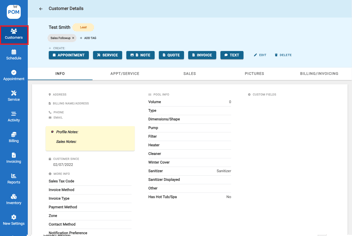
Pool Office Manager includes a built-in chemical calculator designed for fast input, accurate outcomes, and record-keeping. Pair it with your mobile device for:
- Instant calculations on every visit
- Logged test results for every customer and date
- Automated service report generation (“before and after” readings)
- Less guesswork for new techs and more trust for every client
- Fast onboarding—no more long-form equations or old school logbooks.
Real-World Results
- Reduced Callbacks: Lower chemical complaints, faster water corrections, and better review scores.
- Client Trust: Branded, digital service reports with readings and adjustments included.
- Profitability: Less time per stop, no wasted chemicals, and fewer emergency cleanups.
FAQ: Pool Chemical Calculators
Can pool chemical calculators handle specialty chemicals?
Yes. Most allow customization for salt, phosphate removers, specialty shocks, and more. Some calculators even provide LSI or TDS (total dissolved solids) outputs for advanced balancing.
What’s the risk of “guestimating” dosages?
Under-dosing leads to algae and bacteria growth; over-dosing can cause swimmer irritation, damage pool equipment, and create compliance issues.
Is digital record-keeping required for compliance?
Many commercial accounts and HOAs now require digital logs for accountability and liability protection. A digital calculator makes compliance easy.
Conclusion: Unlock the Science of Effortless Pool Care
A pool chemical calculator replaces “best guess” with bulletproof science—saving time, money, and stress for every pool business. Whether you run weekly residential rounds or large commercial accounts, this tool makes each route safer, faster, and more transparent.
Ready to reinvent your workflow? Get a demo of Pool Office Manager’s chemical calculator and bring effortless chemistry to every service.