You get the pool ready for a weekend swim, the water looks crystal clear, but after a short swim, everyone ends up with red, irritated eyes and their skin starts to itch. Worse yet, the metal parts of your brand-new ladder start to rust, even though you bought it just last season. The problem often comes down to low pool pH, because when the pH level falls below the safe range, it can damage pool surfaces and equipment while irritating swimmers’ skin and eyes.
In this guide, we’ll explain how to raise pH in a pool, which products are safe to use, and how to keep your water balanced without extra hassle. We will discuss effective methods that will help keep your pool chemistry balanced throughout the season.
Understanding the Ideal Pool pH Level: What Should Pool pH Be
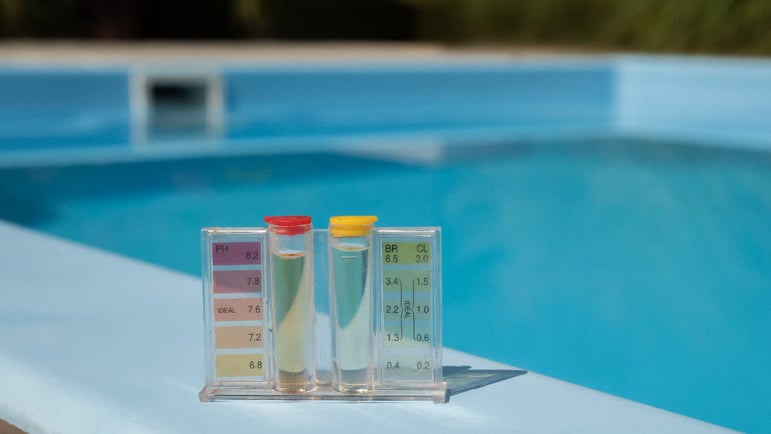
To solve the problem, you need to know your target range and know what your pool pH should be. The pH scale runs from 0 to 14, with 7 being neutral. For pool water, the ideal pH range is 7.4 to 7.6. There’s a reason for this range, since human tears are close to a pH of 7.4.
By regularly maintaining such a pool pH level, you make swimming much more comfortable. When pH drops below 7.2, acidic water can corrode the seams between the tiles, damage expensive internal parts of filters, and cause severe skin irritation. Therefore, the question of how to raise pool pH concerns not only water clarity, but also your well-being and avoiding costly repairs. Every owner should know what the optimal pH is and how to achieve it safely.
Testing First: How to Check Your Pool pH Balance
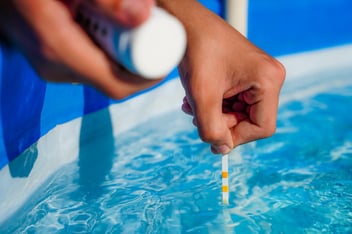
You can’t judge pool pH by sight or smell, so before looking for ways to increase pool pH, you need to get an accurate reading from your pool. Using test strips is the fastest method for home use, when you simply dip a test strip into the water and compare the color to the chart on the package. However, liquid drop test kits usually give more accurate pH readings, so you can see exactly what your pool water’s pH is.
If you don’t want to compare color shades by eye, there are digital photometers that immediately show the current pH level on a digital screen. Take the water sample about 40 cm below the surface and away from return jets. If your test shows 7.0 or lower, you need to immediately take steps to bring the pH back up quickly and effectively.
The Main Reasons Your pH Balance in Pool Is Dropping
Why does pool water become acidic in the first place, even if everything looked fine last week? Rainwater is often slightly acidic and can lower your pool’s pH after a heavy storm. Active use of the pool, kids playing, sunscreen washing off, and everyday dust or debris also slowly affect the chemical composition, all of this can affect water chemistry and leave you wondering how to adjust pool pH.
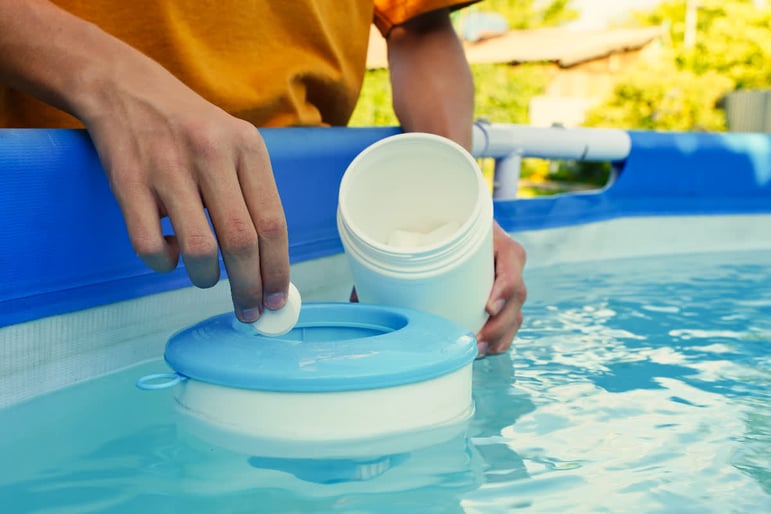
The most common technical reason lies in using disinfectants incorrectly, since some types of chlorine can lower pH. If you do not know exactly, how much chlorine to add to pool, and add tablets without measuring, you can accidentally throw all your water chemistry out of balance. A deep understanding of what will raise pH in pool and what lowers it is critically important to avoid costly damage to pool equipment.
Step-by-Step: How to Raise pH in Pool Water
Once we have diagnosed the problem, it’s time to fix it. When pool owners ask what to use to raise pH, the most common options are soda ash and baking soda, depending on your pH and alkalinity levels. If you need to raise pH more directly, soda ash is usually the better choice than baking soda.
Here is the correct algorithm for raising pH in pool:
- Measure or estimate your pool volume so you don’t overdose the chemicals.
- Calculate the correct dose according to the product label.
- Dissolve the required amount of powder in a large bucket of warm water.
- Slowly pour the solution around the edges of the pool with the pump running.
- Let the water circulate for a few hours and test the water again to check the ideal pool pH.
Following these simple steps guarantees safe and effective restoring water balance. When looking for the best way to raise pH in pool, always remember to be careful and don’t try to rush the process.
Adjusting pH in Pool: Common Mistakes to Avoid
The process may seem simple, but when increasing pH in pool, beginners often make mistakes that take time to fix. The biggest problem is adding too much product at once, when the owner wants to know how to fix pH level in pool and fix everything in one go. Because of this, the pH can jump too high, the water becomes cloudy, and scale can start forming on the pool walls.
Another problem is ignoring the total alkalinity, which acts as a buffer that helps keep pH stable. Not knowing how to balance pH and alkalinity in pool, your pH will keep bouncing up and down after even a light rain. First, it is worth stabilizing the alkalinity, and only then adjust the pH directly, never mixing different pool chemicals in the same container.
Professional Solutions for Pool Inventory and Management
A disorganized chemical stockroom often leads to the use of expired or improperly stored products, which negatively affects the quality of the water. Professional pool service companies use pool inventory management to know the exact amount of chlorine or remaining soda ash at the main warehouse and in every service truck. This keeps daily operations much more organized and helps to avoid unforeseen financial losses.
When a technician is on-site, they simply enter the test results into the swimming pool service software, and the software calculates what to add if pH is low in pool.
Digital tools reduce human error, allowing employees to easily decide, how do you raise the pH in a swimming pool across multiple pools and service locations. Choosing the best pool service software can help a growing business maintain service quality.
Answering Questions on How to Raise the pH in Pool
Pool owners often run into the same pH problems, so it is worth analyzing a few common questions from pool owners. Many people want to know how to raise pool pH quickly without clouding the water. The key is to make gradual adjustments: add small portions of the powder, otherwise minerals can fall out of solution and make the water cloudy.
Owners with saltwater chlorine generators usually deal with pH differently, since saltwater chlorine generators often cause pH to rise over time, so these pools may need pH-lowering adjustments more often than pH-raising ones. Many pool owners also ask whether they can use regular baking soda to raise pH. Baking soda can help, especially when total alkalinity is also low, so it is suitable only for situations where both pH and total alkalinity are low.
How to Maintain Water Balance Every Day
In real life, pool pH is not a number you set once and forget. This indicator changes dynamically: in the morning a group of kids swims in warm water, and in the evening you add fresh cold water from a well. That’s why regular testing matters.
To keep the water clean and balanced, follow a few basic rules:
- Test the water at least twice a week under normal conditions.
- Record your test results to track the overall dynamics.
- Always dissolve dry chemicals completely before adding them to the pool.
- Don’t panic over small deviations from the ideal range.
Having developed such a systematic approach, you will begin to intuitively understand how to bring pH up safely or how to safely lower it. Over time, regular maintenance will become a simple routine, where each small step helps protect your equipment and keeps the water comfortable for swimming.