In this post
Get the latest insights delivered to your inbox
Scaling a pool service business is very different from just “getting busier.” You can add more stops, trucks, and techs and still feel like you are treading water—long days, constant fires, and margins that don’t improve.
What separates scalable pool companies from the rest is not just hard work; it is the systems they build, especially around scheduling, billing, and communication.
This guide breaks down 10 common mistakes that stop pool companies from scaling and what to do instead. The thread running through all of them: relying on memory, paper, and disconnected tools works at a small size, but becomes a serious limiting factor as you grow. The fixes almost always involve clearer processes and the right software to support them.
1. Running Everything From the Owner’s Head
Many pool companies start with one person doing everything: estimating, scheduling, ordering, billing, and sometimes even field work. That works when you have 20–30 accounts. It becomes a bottleneck at 100+.
Why this stops scaling
- Decisions wait on one person.
- No one else can easily step in when the owner is sick, on vacation, or overloaded.
- Training new staff becomes slow and inconsistent because “how we do things” is unwritten.
What to do instead
- Document core processes: how you schedule, how you invoice, how you handle service issues.
- Use software as a shared “brain” so schedules, client notes, and job history are visible to the team instead of locked in the owner’s memory.
- Give office staff and lead techs the tools to make decisions without constant owner intervention.
The more your business runs on systems rather than memory, the easier it is to add people and accounts without everything defaulting back to you.
2. Staying Stuck on Paper and Spreadsheets
Clipboards, notebooks, and spreadsheets feel cheap and flexible, but they quickly become a drag on growth.
How this blocks scale
- Schedules are hard to adjust quickly.
- Job notes and chemical logs are scattered and hard to find.
- Invoicing relies on stacks of route sheets making it back to the office intact.
- Reporting and forecasting are nearly impossible without hours of manual tallying.
What to do instead
- Move scheduling and job tracking into a centralized system that techs can access on their phones.
- Capture job details, photos, and readings digitally at the pool, so there is no second round of data entry.
- Let billing flow from completed jobs instead of retyping everything from paper.
Digital systems do not replace your judgment—they remove the busywork that keeps you from focusing on growth.
3. Treating Every Job as a One-Off
Scaling depends on recurring, predictable work. If your revenue is mostly one-time greens, emergencies, and bargain cleanups, each month starts from zero.
Why this limits growth
- You cannot reliably plan routes, staffing, or cash flow.
- You spend more time selling each individual job instead of building long-term relationships.
- Your techs bounce between unpredictable tasks instead of efficient, repeatable routines.
What to do instead
- Create clear recurring service packages (weekly, bi-weekly, seasonal, commercial).
- Build your pricing so recurring plans are attractive and easy to understand.
- Use your software to set up recurring visits and recurring billing, so your base revenue is predictable.
A strong recurring model gives you stable income, which makes it safer to invest in more techs, vehicles, and marketing.
4. Ignoring Route Efficiency
At a small scale, driving back and forth across town might just feel like part of the job. As you grow, wasted windshield time becomes one of your biggest hidden costs.
Scaling problems this creates
- Techs can only handle so many stops per day, even if those stops are simple.
- Fuel and vehicle wear eat into profits.
- Adding new clients feels impossible because routes already feel “full,” even when they are inefficient.
What to do instead
- Map your current routes and cluster customers by geography.
- Assign days based on areas rather than random order.
- Use route-aware software that can optimize sequences and show you where you have room to add accounts.
Small reductions in average drive time per stop compound into big capacity gains across a season.
5. Slow, Manual Invoicing and Collections
If billing happens at the end of the week, or worse, at the end of the month, you are tying up cash and creating more admin work as you scale.
Why this breaks at larger sizes
- The more jobs you do, the easier it is for some to slip through the cracks and never get invoiced.
- Cash flow gets lumpy and unpredictable.
- Your office spends a large percentage of time chasing late payments instead of supporting growth.
What to do instead
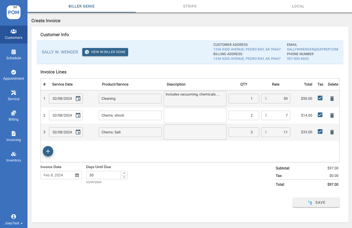
- Connect job completion to invoicing: when a job is closed in your system, it automatically becomes ready to bill.
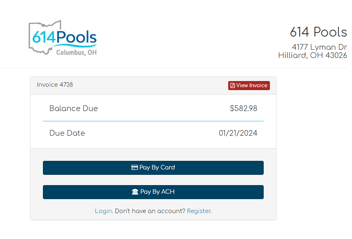
- Use digital invoices with online payment links to get paid faster.
- Consider recurring or automatic billing for regular clients to reduce friction.
Software that ties jobs, invoices, and payments together lets you scale up volume without multiplying billing headaches.
6. No Consistent Way to Track Customer Communication
Scaling companies often lose customers not because of poor work, but because of poor communication: unanswered messages, missed follow-ups, or different staff giving conflicting information.
Symptoms of this mistake
- Customers call repeatedly for updates on estimates or repairs.
- You find out about cancellations only when a tech arrives at a property and the client says, “I left a message last week.”
- Important details (like gate codes or special preferences) are hidden in one person’s phone or memory.
What to do instead
- Keep all customer contact information, notes, and communication history in one place.
- Use templates and structured notes so staff can see what has been promised and what is pending.
- Set reminders and tasks in your system for follow-ups, not just in personal calendars.
A shared CRM-style view of each customer makes it far easier to hand off responsibilities and maintain consistent service as you grow.
7. Underinvesting in Training and Standardization
When a pool company is small, each tech might develop their own style of service. At scale, that leads to uneven quality and more callbacks.
Scaling problems this causes
- Customers notice that service quality depends on “which tech we got.”
- New hires take a long time to become productive.
- You get more callbacks and complaints as volume increases.
What to do instead
- Create standardized checklists for different visit types (weekly service, opening, closing, commercial visit).
- Train techs on these standards and make them available in the field via your software.
- Use your system’s job data and photos to spot where steps are being skipped and provide coaching.
Standardization does not mean being rigid—it means ensuring a consistent minimum level of quality, which is essential when you are no longer personally at every pool.
8. Not Knowing Your Numbers
If you are scaling based only on how busy you feel, you might be growing revenue while losing margin.
Warning signs
- You are busier than ever but do not see much more left over at the end of the month.
- You are unsure which routes or services are actually profitable.
- Pricing decisions are based on “what others charge” rather than your costs.
What to do instead
Track a few key metrics:
- Revenue and time per route.
- Average revenue per customer.
- Cost per visit (labor, fuel, chemicals).
- Churn (how many clients you lose each season and why).
With integrated software, you can pull these numbers from your real schedules, jobs, and invoices instead of building manual spreadsheets. That lets you adjust prices, prune unprofitable accounts, and scale where it makes sense.
9. Treating Marketing as a One-Off Task
Many pool companies only think about marketing when they suddenly need more work—after losing accounts or at the start of the season. Scaling requires a steady pipeline, not occasional bursts.
How this holds growth back
- You experience feast-or-famine cycles.
- You scramble for new clients just when you’re busy with operations.
- You rely too heavily on chance referrals.
What to do instead
- Put simple, ongoing marketing systems in place:
- A website with an easy quote request form.
- A Google Business Profile that you actively maintain.
- Review requests after jobs.
- A basic referral program.
- Use your software to automatically capture leads, track their source, and remind you to follow up.
When lead tracking and follow-up are baked into your daily tools, marketing becomes part of your regular process rather than a separate, occasional project.
10. Waiting Too Long to Implement Software
Perhaps the biggest mistake is believing software is something “for later,” once you are bigger. In reality, waiting often makes the transition harder and slows your ability to scale.
Why delaying hurts scaling
- Processes solidify around manual work; breaking those habits later is harder.
- You miss out on months or years of data that could inform better decisions.
- When you finally decide to implement tools, you are already overwhelmed, making change more stressful.
What to do instead
- Start with a right-sized system when you are still small enough to adapt quickly.
- Use it first for the areas causing the most pain—scheduling, billing, or customer tracking.
- Grow into more features as your business evolves.
The goal is not to buy the most complex platform possible; it is to choose a toolset that can grow with you. Early adoption lets your systems mature alongside your business, so scaling feels like turning up the volume, not rebuilding the whole sound system mid-concert.
Bringing It All Together
The 10 mistakes that stop pool companies from scaling have a common theme: relying on ad hoc methods that work at a small size but break under growth. Paper routes, owner-only decision-making, scattered notes, slow billing, and untracked communication all create friction that compounds as you add more clients and techs.
On the other hand, companies that scale smoothly tend to:
- Document and share their processes.
- Use software as a central hub for schedules, customers, jobs, and billing.
- Build recurring revenue models instead of living on one-off jobs.
- Monitor a few key numbers and adjust deliberately.
- Put simple, consistent marketing and follow-up systems in place.
The difference is not that they work harder; it is that they let their systems work harder for them.
A Practical Next Step: See How the Right Software Handles Scale
If you see your own business in some of these mistakes, it is a good sign that you are ready for systems that support growth. The easiest way to evaluate whether modern pool service software can help is to see it in action.
In a brief, focused trial or demo, you can:
- Walk through how routes and schedules are managed for multiple techs.
- See how jobs turn into invoices automatically.
- Explore how customer notes, photos, and chemical logs stay organized.
- Check how the system tracks revenue, routes, and basic KPIs as you grow.
From there, it becomes much easier to decide if the software can remove the friction that has been holding your pool company back from scaling—and whether a free trial is the right next step to build a business that grows faster with less stress.