
Pool routes trade all the time — a retiring owner, a company trimming its far side of town, a solo operator cashing out. Priced right, a route is the fastest way to grow; priced on the seller’s story instead of the seller’s records, it’s an expensive way to buy churn. Here’s how experienced buyers read a route.
Buying a pool route without buying someone’s problems
What is a pool route actually worth?
Routes are commonly quoted as a multiple of monthly recurring revenue — in many US markets that conversation lands somewhere around 8–12× monthly service billing, adjusted for density, rates, and account quality. But the multiple is the least interesting number in the deal. Two routes billing the same $10,000 a month can differ wildly in value: one is 80 pools in three zip codes at healthy rates on autopay; the other is 60 pools scattered across a county, five of them always-green, a third of them underpriced since 2022. The multiple prices the revenue; you’re buying the work.
Read the records, not the story
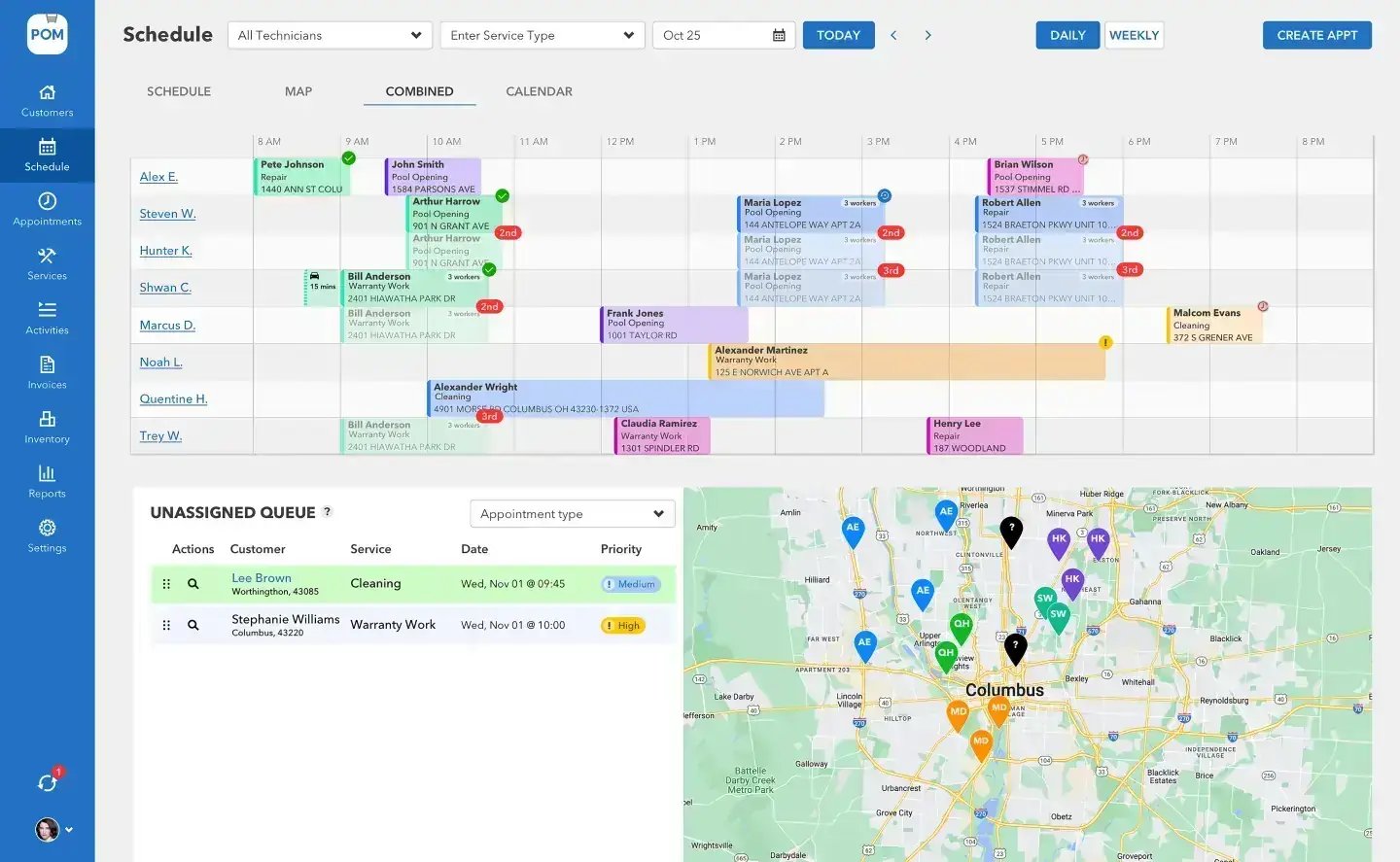
Ask for per-account service history — visit dates, chemical usage, and payment records — not just a customer list with monthly rates. Sellers running real service software can hand you this in minutes (POM exports it to CSV); sellers who can’t produce records are asking you to price blind, and your offer should say so. What the records tell you: which accounts eat chemicals (margin), which get skipped in rain weeks (fragility), which pay late (cash flow), and how far the truck actually drives (the hidden cost of “80 accounts”).
Diligence
Questions that surface the problem accounts
Rate honesty
When was each account’s last price increase? A route of 2022 rates needs a repricing pass you should price into the offer.
Density
Plot every address on a map before you offer. Ten far-flung accounts can eat the margin of the other seventy.
Chemical load
Chemical cost per account, from actual usage records. The always-green pool is a line item, not an anecdote.
Contracts & terms
Month-to-month or agreements? Autopay or checks? What was promised (equipment repairs? weekly photos?) that you’re now inheriting?
The transition is where routes are won or lost
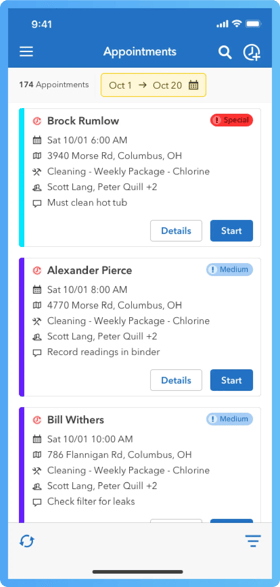
Customers don’t buy your deal — they liked the old guy. The playbook that keeps them: a joint letter or text from the seller introducing you before the first visit; keep the service day and expectations identical for the first month; and over-communicate — photo-backed service reports after every visit are the single strongest “nothing bad just happened” signal a new owner can send. Attrition in the first 90 days is the real price of the route; every account you keep above the assumption you priced is pure return.
BIG PICTURE
Inheriting a route next month?
Load the accounts, routes, and rates into POM before day one — we’ll import the seller’s export free, usually within 1 business day. 614-710-0074.
Day one, organized
Import the customer list (the seller’s CSV or QuickBooks export → files@poolofficemanager.com, free), rebuild the week as tight geographic loops rather than inheriting the seller’s history, load gate codes and equipment notes onto each property, and turn on photo-backed reports from the first visit. The first month’s goal is boring: same day, same quality, more proof.
After 90 days: reprice from data
By then your own records — minutes on site, drive time, chemicals per account — tell you which inherited accounts are underwater. Reprice them from numbers (“your pool’s chemical usage runs 2× the route average”), keep the ones worth keeping, and let the worst geography go to a competitor who’ll subsidize it instead of you.
Keep exploring
Short-staffed? The route playbook · Your service data is telling you something · Scheduling & routes in POM · Software pricing explained
We were excited to try this program and have been satisfied with the use. Love the scheduling feature, from an office stand point, and the guys are happy with not having to use paper.
Town & Country
I can easily keep track of my employees progress throughout the day and have the ability to send other techs to fill in if needed. Love the maps optimization feature. Saves time and money
Aqua Clear Pools
Great software program. Keeps our route in order while providing detailed service reports to all of our clients when the cleaning/maintenance is complete
Blue Water Pools
FAQ
Route-buying questions
How much does a pool route cost to buy?
Commonly quoted as a multiple of monthly recurring service billing — around 8–12× in many US markets, adjusted for density, rates, account quality, and whether records exist to prove all three. Treat any specific multiple as an opening position, not a rule.
What should I ask for in due diligence?
Per-account service history: visit dates, chemical usage, payment history, last price increase, and the service address list you can map. A seller on real service software exports all of it in minutes; no records means price accordingly.
How do I keep the customers after buying a route?
Introduction from the seller before your first visit, identical service day and standards for the first month, and photo-backed service reports from visit one. First-90-day attrition is the real price of the deal.
Should route customers sign new agreements?
Have every transferred account confirm terms with you — rates, scope, payment method — within the first month, even where month-to-month is the norm. It surfaces inherited promises early and moves everyone to autopay while goodwill is fresh.
Run the route you bought like you priced it
30 days free — import the accounts, tighten the map, and start the paper trail on day one. 614-710-0074.