
Closing season is six weeks of one-time jobs stacked on top of your normal routes — every customer wants the same two weekends, every job needs parts on the truck, and the company that closes the pool usually opens it in spring. Here’s how organized pool service companies run the rush, from the first September call to the last cover.
The Pool Closing Playbook
When should pools actually close?
The honest answer is later than most customers think: closing while water is still warm (above roughly 65°F) invites algae to grow under the cover all fall. Most northern companies target sustained water temperatures in the low 60s and falling — typically late September through October depending on region — and educate customers that “first cold week” closings trade a clean spring opening for a green one. Put that explanation in writing once and send it with every closing confirmation; it converts “why can’t you come this week?” calls into patience.
The closing itself: one sequence, every pool
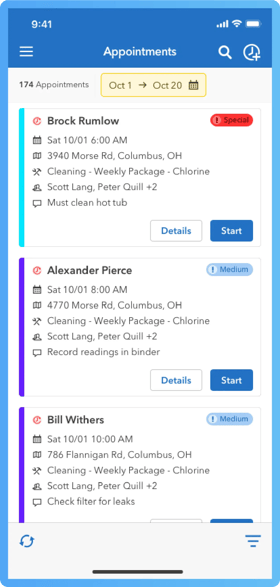
Whatever your regional specifics — balance the water a few days ahead, clean thoroughly, drop the water level per cover type, blow out and plug the lines, add non-freeze protection where required, winterize the equipment pad, and photograph everything before the cover goes on. The exact steps matter less than this: every crew runs the same checklist in the same order, because the most expensive closing is the one you redo in November when a line freezes. In POM, closings are their own service type with their own multi-step checklist and required photos — so the newest crew closes like the owner does.
Running the rush
Four habits of a smooth closing season
Book by geography
Batch closings by neighborhood, not by who called first. A closing day that stays in two zip codes fits two more jobs in.
Confirm in writing
Every closing gets a confirmation with the date, what’s included, and what the water temp explanation. Fewer calls, fewer surprises.
Stage the parts
Plugs, gizzmos, antifreeze, cover hardware — count them in September, stage them per truck per day. A missing $4 plug costs a return trip.
Photograph everything
Water level, plugs in, pad winterized, cover on. The spring “your guys never…” conversation ends with a photo from October.
Scheduling six weeks of one-time jobs
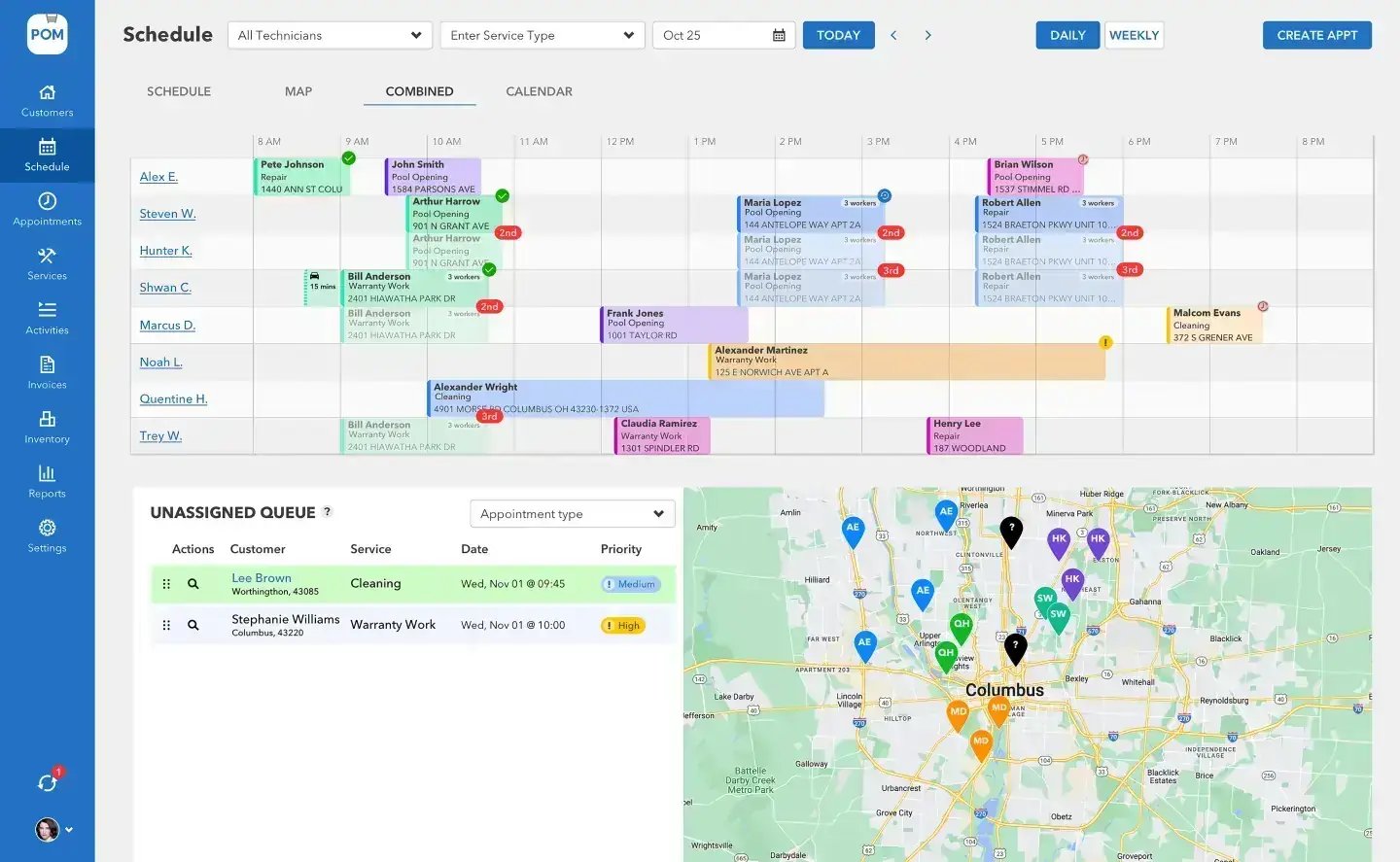
The trap is treating closings as interruptions to the route instead of a season of their own. The pattern that works: hold specific days (or half-days) per week for closings only, fill them by geography from a single queue of requests, and let the recurring routes compress as weekly customers wind down. In POM, closing requests sit in the unassigned queue until dispatch drops them into those held days on the map — and “this and all following” edits wind down the weekly routes in one motion instead of fifty.
Pricing closings honestly
A closing carries real costs a weekly visit doesn’t: more labor, parts, antifreeze, and disposal time. Companies that price closings from last year’s actual job times and parts usage — both sitting in their service records — stop subsidizing the pools with 40-foot covers and hard-to-blow lines. Custom invoice descriptions let the line item say exactly what was done.
BIG PICTURE
Closing season is why seasonal software matters
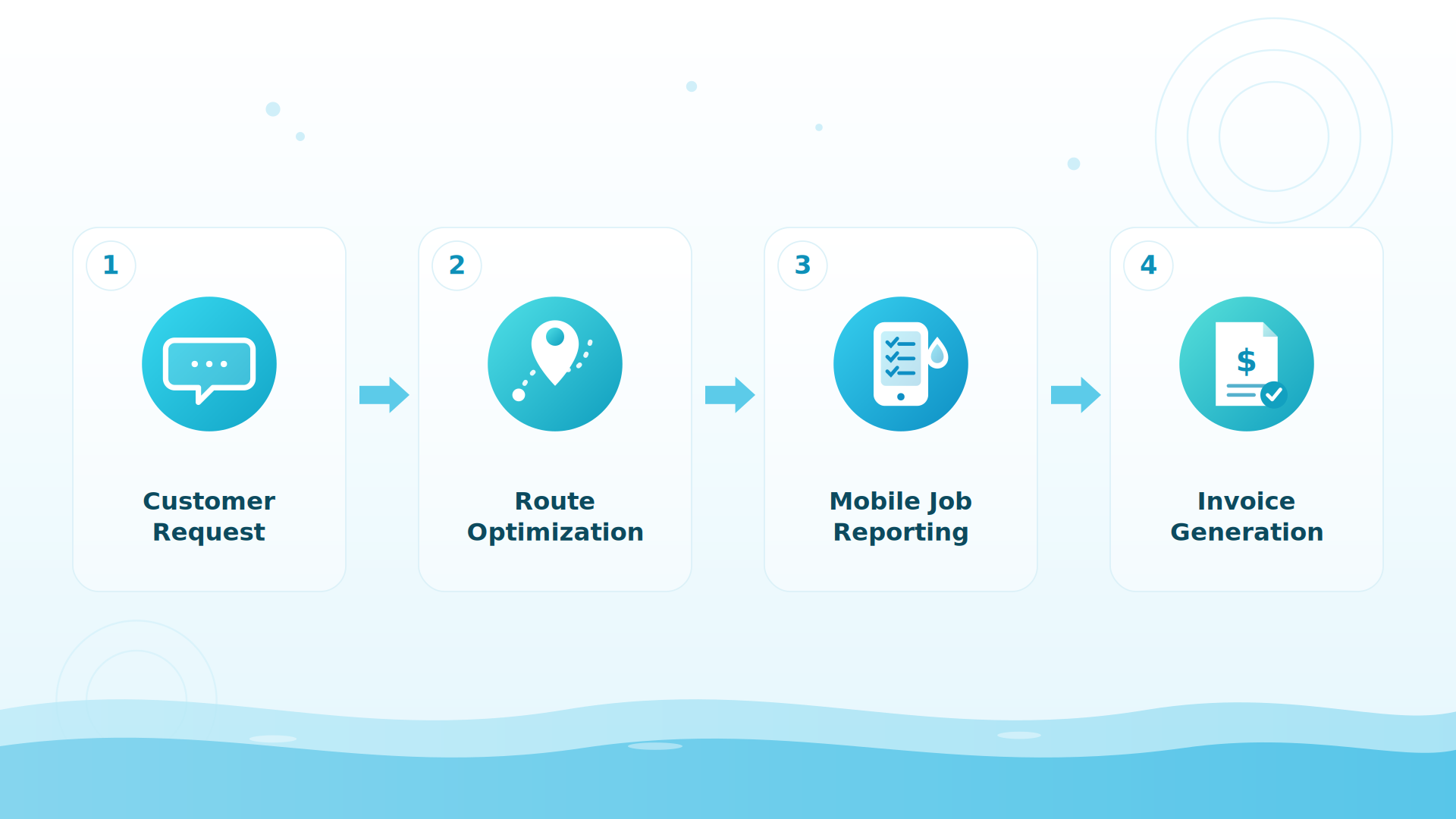
Service types with checklists, a queue for the rush, routes that wind down in one edit, and users you can deactivate in the off-season. Built for exactly this.
The closing is the spring opening’s down payment
The company that closes the pool gets the opening — if it asks. Book the spring opening at closing time (even loosely: “week of April 20”), note the cover type and any parts to replace over the winter, and quote repair work you spotted at the pad while it’s fresh. A closing route that books 70% of its own openings has already sold its spring.
What to do with the off-season
Deactivate seasonal users so you stop paying for idle seats (POM bills month to month — a 10-tech summer and a 4-tech winter cost what they should). Then use the quiet to read the season’s data: which customers were profitable, which routes drove too far, what chemicals actually cost per pool — it’s all in your service records, and January is when repricing decisions get made well.
Keep exploring
Scheduling & routes in POM · Short-staffed? The route playbook · Inventory & ordering · FAQ
We were excited to try this program and have been satisfied with the use. Love the scheduling feature, from an office stand point, and the guys are happy with not having to use paper.
Town & Country
I can easily keep track of my employees progress throughout the day and have the ability to send other techs to fill in if needed. Love the maps optimization feature. Saves time and money
Aqua Clear Pools
Great software program. Keeps our route in order while providing detailed service reports to all of our clients when the cleaning/maintenance is complete
Blue Water Pools
FAQ
Closing season questions
When is the best time to close a pool?
When water temperature is sustainably in the low 60s°F and falling — typically late September through October in northern markets. Closing warm water invites algae under the cover; explain that to customers in writing and the schedule pressure eases.
How many closings can a crew do in a day?
It depends on pool complexity and — more than anything — drive time. Crews batched by neighborhood routinely fit one to two more closings per day than crews routed by call order. Track your actual per-job times this season and next year’s schedule builds itself.
How should a pool company price closings?
From last season’s actual labor minutes and parts per closing, not a flat guess. Your service records already hold both numbers; the pools that take twice as long should stop costing you the difference.
How does POM handle closings differently from weekly service?
Closings are their own service type with their own multi-step checklist, required photos, and pricing. Requests queue unassigned until dispatch places them by geography; recurring routes wind down with “this and all following” edits; and custom invoice descriptions handle the bigger tickets.
Should I book spring openings at closing time?
Yes — even loosely. Note the cover type, parts to replace, and a target week. The company that closes the pool gets the opening if it asks while standing at the pool.
Run this closing season on rails
30 days free — set up your closing service type and queue this week’s requests. 614-710-0074.